
Overview & Clinical Background
Bell's Palsy is an acute peripheral facial nerve palsy resulting from inflammation and edema of the 7th cranial nerve within the narrow bony fallopian canal. It typically develops rapidly over 24 to 48 hours, causing unilateral facial drooping, inability to close the eye, and loss of taste on the front of the tongue. The most critical step is differentiating it from an acute central stroke (where the forehead is characteristically spared).
Signs & Symptoms to Watch For
Recognizing early warning signs prevents irreversible nerve or brain damage.
Root Causes & Underlying Mechanisms
- Viral reactivation (Herpes Simplex Virus Type 1, Varicella Zoster Virus) causing inflammatory demyelination of the facial nerve
- Immunological and microvascular swelling compressing the nerve against the rigid bony fallopian canal
- Risk factors: Diabetes mellitus, pregnancy (especially third trimester), and upper respiratory tract infections
Diagnostic Evaluation & Testing Protocol
Tests and investigations Dr. Chhatrapal uses to confirm the diagnosis.
Clinical Neurological Examination: Confirming Lower Motor Neuron (LMN) facial palsy (forehead involvement) vs Upper Motor Neuron (UMN) stroke
Facial Nerve Conduction Study (NCS) & Blink Reflex: Assessing the percentage of axonal degeneration (electroneurography) after day 7 to predict prognosis
Ear & Mastoid Inspection: Ruling out vesicular eruptions of Ramsay Hunt syndrome (herpes zoster oticus)
Brain MRI: Indicated if paralysis does not recover after 8-12 weeks, is recurrent, or involves other cranial nerves
Treatment Details & Procedures
Every patient at our practice receives a customized treatment roadmap designed under the clinical guidance of Dr. Chhatrapal Singh Sahu. Below are the key treatment modalities and procedural therapies utilized:
High-Dose Oral Corticosteroid Therapy (Within 72 Hours)
Immediate initiation of oral Prednisolone for 7-10 days to rapidly reduce nerve edema and prevent permanent axonal death within the fallopian canal.
Antiviral Combination Therapy
Oral Valacyclovir or Acyclovir added in severe facial palsies (House-Brackmann Grade IV-VI) or when Ramsay Hunt syndrome is suspected.
Crucial Corneal Eye Protection
Intensive eye lubrication (preservative-free artificial tears by day, thick lubricating ointment by night), protective moisture chambers, and careful eye taping to prevent corneal ulceration and permanent vision loss.
Facial Neuromuscular Re-Education & Physiotherapy
Gentle mirror biofeedback exercises, facial massage, and neuro-physiotherapy. Avoiding aggressive electrical stimulation which can promote abnormal synkinesis.
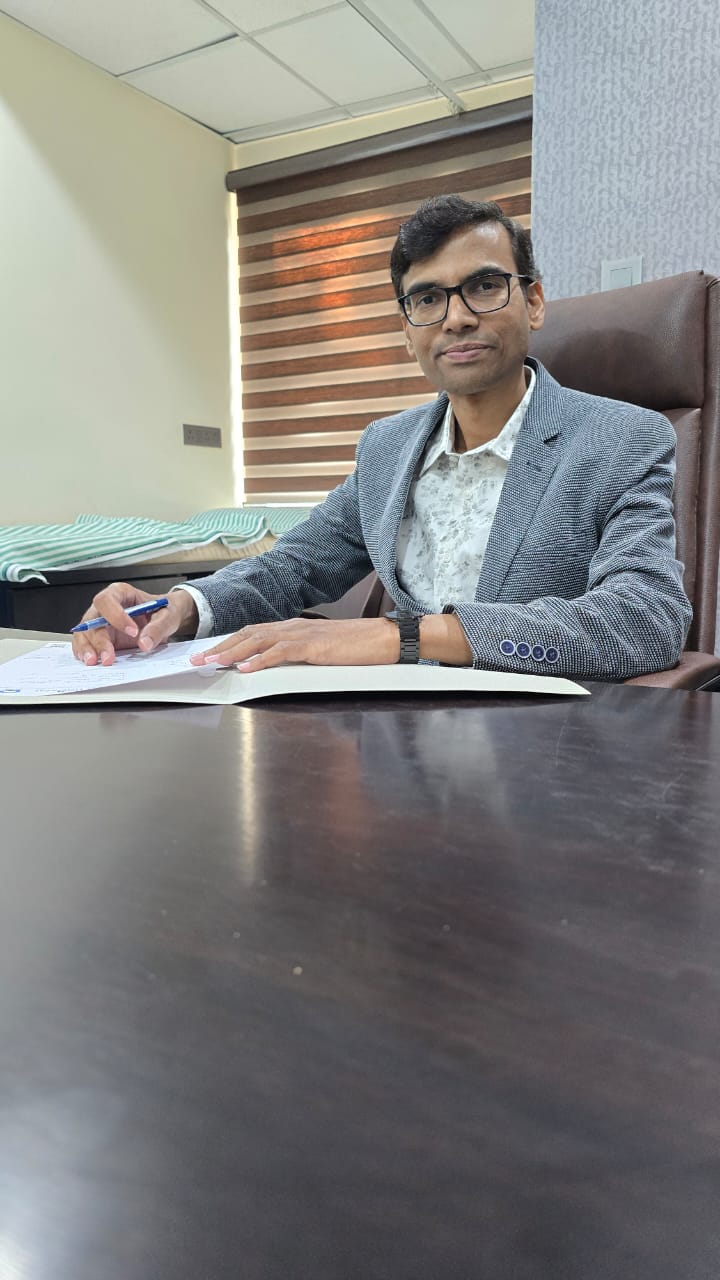
Dr. Chhatrapal Singh Sahu's Approach
MBBS, MD - Medicine, DM - Neurology • Consultant Neurologist
Dr. Chhatrapal Singh Sahu emphasizes starting corticosteroid treatment within the first 72 hours of symptom onset. Under early medical protocol, over 85% of patients achieve complete or near-complete recovery of facial symmetry.
Frequently Asked Patient Questions
Clarifying common concerns regarding diagnosis, treatment safety, and recovery.